How Compostable Bags Actually Work
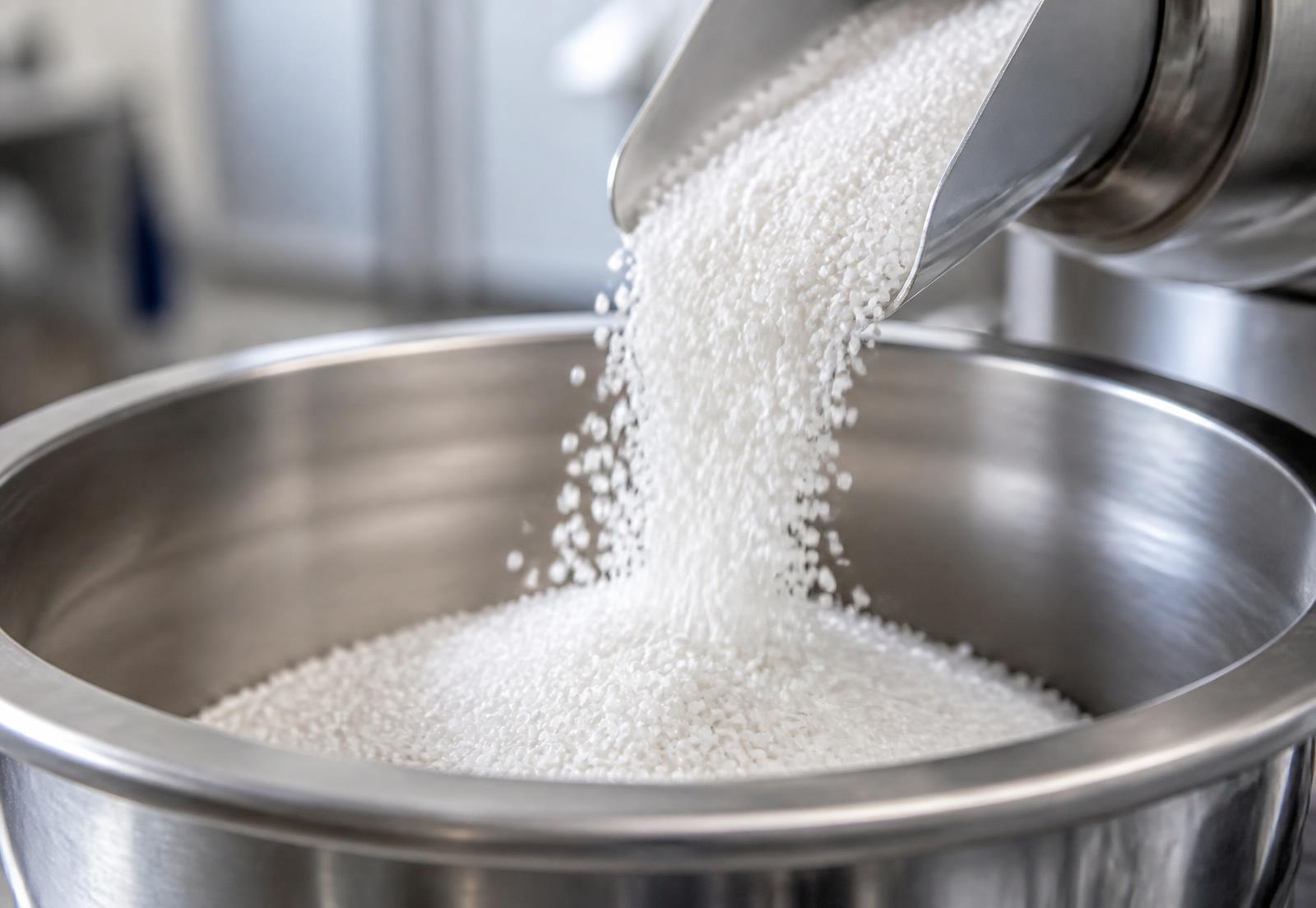
It starts with plants, not petroleum
Compostable film is made from bio-based polymers derived from renewable sources such as corn starch, along with compostable co-polyesters that give the film its flexibility and strength. Unlike conventional polythene, the polymer chains are built so that natural enzymes can break them apart.
The manufacturing step
The resin is dried, melted and blown into a continuous tube of film. Controlling temperature and draw ratio at this stage is what determines gauge consistency, and gauge consistency is what determines whether a bag tears at the handle. The film is then printed if required, cut to size, and sealed into its final D Cut, U Cut or W Cut form.
What happens in compost
In a composting environment, warmth, moisture and microbial activity combine to disassemble the polymer. Microorganisms consume the fragments as a food source and convert them into carbon dioxide, water and humus-like biomass over a period of months.
Two things are worth stating clearly. Compostable is not the same as biodegradable, which is a vague term with no fixed timeline. And a compostable bag needs composting conditions to perform as intended, which is why disposal guidance on the bag matters as much as the bag itself.
Switching to compostable bags?
Tell us your sizes and monthly volume, and we will share MOQ, lead time and a firm quotation.